
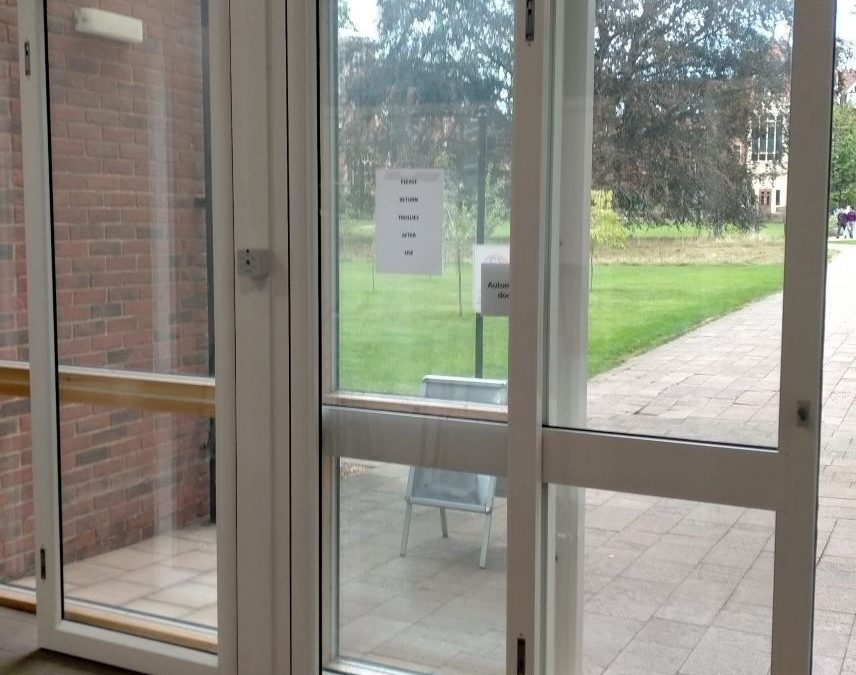
By sliding into a “pocket” within the wall, pocket doors remove the closing edges and collision points where pedestrians can get trapped or injured, providing a safer and more accessible entryway, particularly for those with mobility needs.
Why would you specify or retrospectively recommend the installation of Pocket Doors?
- There are vulnerable people, you could get a situation where the use of the building has changed or on the day there are people around and on others days are not.
- Persons can pass close to the door, thus making it slow to open, such as the design of the building means people do this every time
- Persons can congregate in the area thus making the door open slowly
- Persons can congregate in the area thus putting them at risk of impact or crushing
- There are items in the area attracting persons to where they could be at risk of impact or crushing even if the door opens slowly
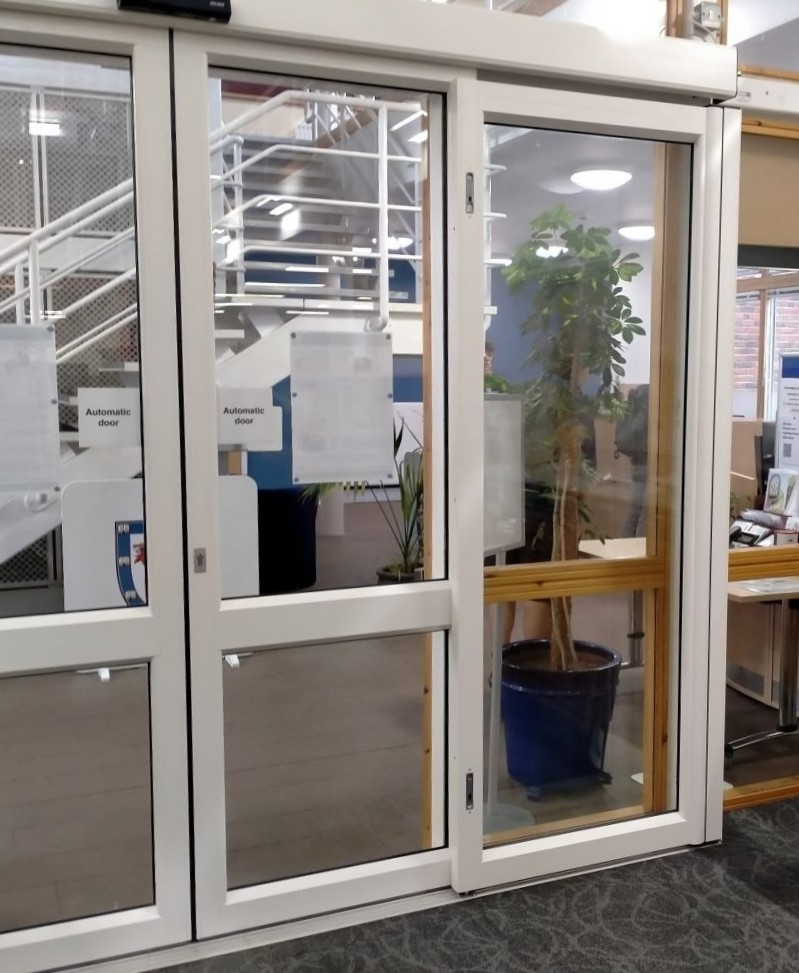
- There are devices to activate the door in this area such as access control readers, push pads, press to exit buttons, signing in or out tablets, car park registration tablets, so operationally the door always opens slowly and putting people at risk in the area
- Building owners / workers are placing items in the area making the door open slowly, such as baskets in a shop, flower displays, etc, making the door open slowly
- If the door opens slowly, what about a person approaching who has no idea it will open slowly and impacts the door or who has to hesitate
How Pocket Doors Enhance Safety
- Eliminates Collision Points:
Unlike traditional automatic sliding doors, which have a door leaf that can create danger zones, a pocket door creates a cavity in which the doors slide inside. This design eliminates the potential for people to be caught between the door and the frame as it opens.
- Reduces Entrapment, Crushing or Impact Risks:
Generally sliding doors are fitted with safety sensors which cover the opening direction area which will only slow down the door if detected. The installation of pocket doors will eliminate the risk of pedestrians becoming trapped or colliding with the door, which is a common hazard with standard automatic doors, especially in high-traffic areas.
- Improved Compliance:
Pocket door systems are often designed to comply with safety standards, such as BS EN 16005, which sets out safety requirements for automatic sliding, revolving, and swinging doors
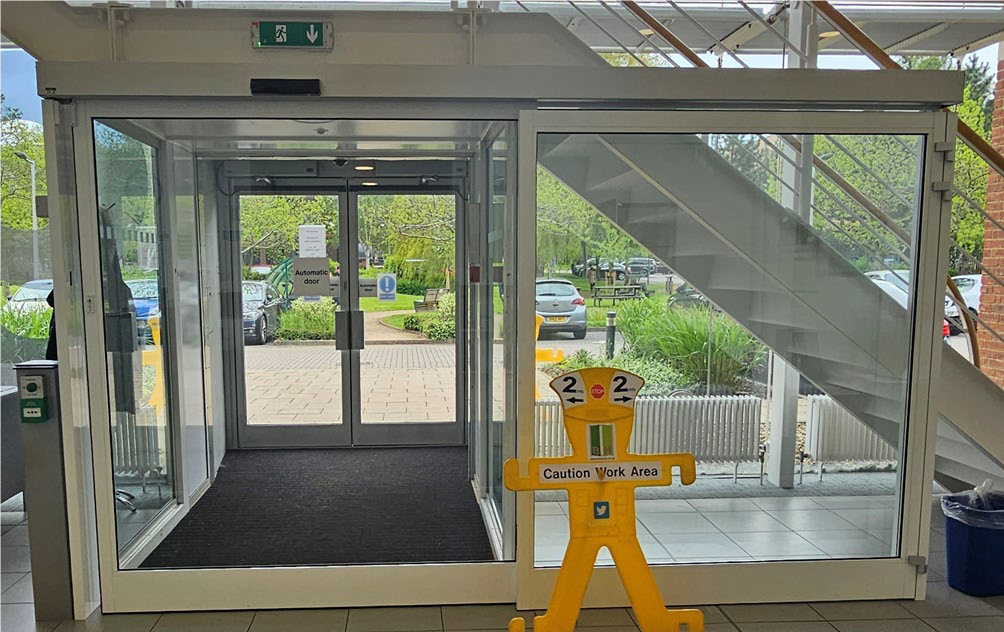
4 List of significant hazards
4.1 General
This clause contains all the hazards, hazardous situations and events identified by risk assessment as significant for this type of machinery and which require action to eliminate or reduce the risk.
Unless otherwise specified, a hazardous point is considered to exist up to a height of 2,5 m above the floor or any other permanent access level.
5 Safety requirements and/or protective/risk reduction measures
5.1 General
Power operated pedestrian doorsets shall comply with the safety requirements and/or protective/risk reduction measures of this clause. The on-site risk analysis takes into account the prevention of contact between the moving door leaf and the user, if a significant proportion of the users are elderly, infirm, disabled persons and/or young children.
5.8.2 Guards
Guards such as enclosures, covers, enclosing guards, fixed protective door leaves (pocket screens), may be installed to meet the safety distances to prevent hazard zones being reached by upper and lower limbs.
Guards shall be designed so that:
- persons cannot reach any danger point up to a height of 2,5 m above floor level;
5.8.4.1 Opening of the doorset
If crushing and impact hazards during the opening cycle exist, they shall be safeguarded by one of the following measures:
- there is a safety distance (Y) ≥ 200 mm between the secondary closing edge and adjacent parts of the surroundings with regard to the endangered parts of the human body and the door leaf move along a plain part and the distance (X) between the front surface of the door leaf and the fixed side screen is not more than 100 mm (see Figure 2 a)).
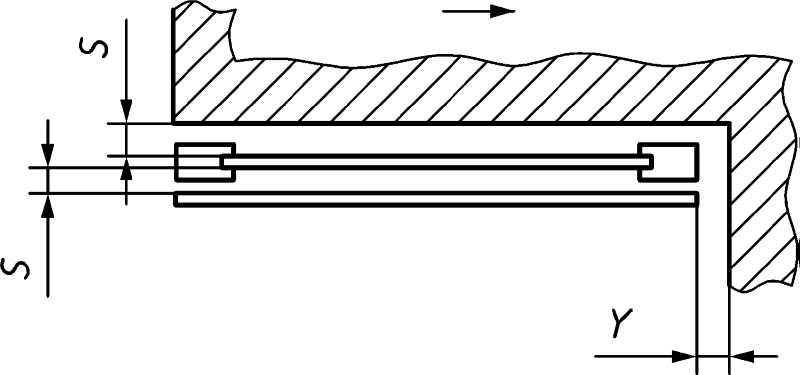
- e) the area of the secondary closing edge is covered by barriers in accordance with 5.8.3, positioned in a distance (S) of ≤ 8mm or ≥ 25 mm in front of the moving part of the doorset
- Enhanced Accessibility:
Because they are installed close to the sliding door, pocket doors reduce the safety sensor area for people. This means that anything or persons in the opening area will not be detected causing the door to open slowly providing a more accessible and less challenging entrance for everyone.
Conclusion
AT BH Doors, we naturally carry out dynamic risk assessments as part of our schedule of works to form part of our Service Contract Agreement. Although any risk assessment checklist maybe subjective or open to personal interpretation our engineers are Doorsafe registered and we are members of the Automatic Door Installation Association (ADIA). This will ensure we are working to the best practice within the industry, applying the relevant standards and regulations to all automatic doors we work upon for our customers.